Coastal Management Fall 2017
2017 Coastal Opinions
Major Stressors-Habitat Fragmentation
___
By Madison Dederick, Thomas Beckley, and Rainey Barton

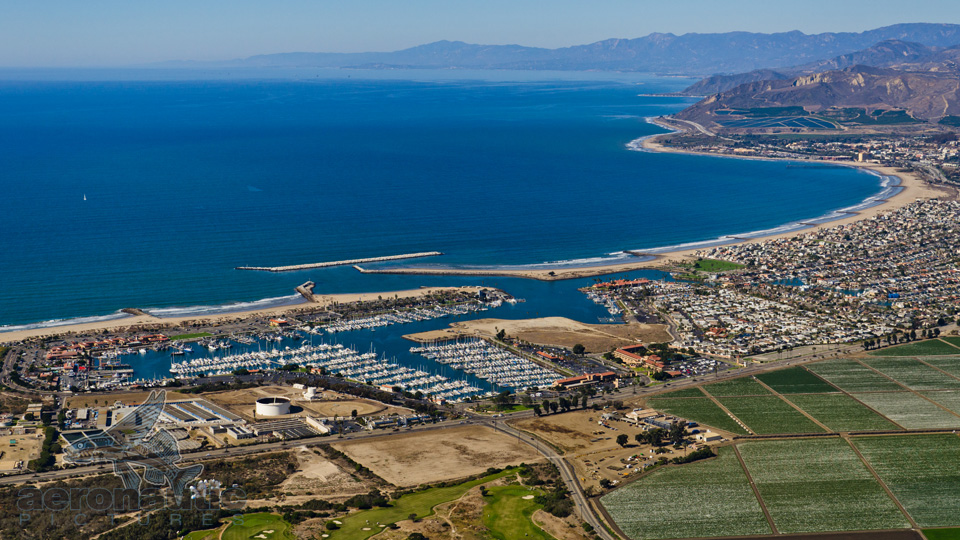
Habitat fragmentation along the Ventura Coastline, California. (source: California Coastal Records Project)
INTRODUCTION
Human settlement is a major source of land transformation worldwide with serious effects on biodiversity (Miller & Hobbs 2002 & United Nations Centre for Human Settlements 1996). Habitat fragmentation caused by urbanization is thought to be one of the largest threats to biodiversity with species sensitive to urban development quickly erased from urban areas as a result (Delaney et al 2010). With a global population of 7.5 billion and growing (Worldometers 2017), the effects of human settlement and urban expansion is sure to have increasing impacts on the world’s natural biota.
One ecosystem that has experienced extensive habitat loss and fragmentation is coastal wetlands. Covering only 1% of the earth’s surface, freshwater wetlands provide a home to over 40% of the world’s species including over 50% of federally listed threatened or endangered species (Duda 1991 & Mitra et al 2003). Although wetlands provide important habitat for diverse communities of plants and animals, historically they have been viewed as a breeding ground for disease-carrying mosquitos (Dahl 1990). This public distaste combined with federal, state, and local policies to drain, fill, and convert wetlands to “productive” uses resulted in more than 53% of U.S. wetlands destroyed between 1800 and 2000 (Dark et al. 2006). The quantification of wetland area remaining in the world provides many challenges, with estimates of total remaining global wetlands comprising at least 0.29 million km2 and less than 9.78 million km2 (Hu et al. 2017). This quantification has resulted in an estimate of 87% of global wetlands lost to date since the beginning of the eighteenth century (Hu et al. 2017). On a more local scale, California wetlands are estimated to have been reduced by more than 90% over the last 200 years (Dahl 1990).The main contributor to this loss is outright destruction due to human development and indirect anthropogenic effects such as global climate change (Hu et al. 2017).
Although much wetland has been lost, all hope should not be given up in their preservation and restoration. To combat wetland loss in California, the California Wetlands Conservation Policy was established in 1993 requiring no net loss of wetlands while encouraging the restoration of degraded wetland (Dark et al. 2006). In addition, southern California has been found to display significant wetland diversity with large proportions of all wetland categories (Dark et al. 2006).One particularly significant wetland extent can be found in Ventura County where 31,000 acres still remain (Dark et al. 2006).
Overview of Current Situation
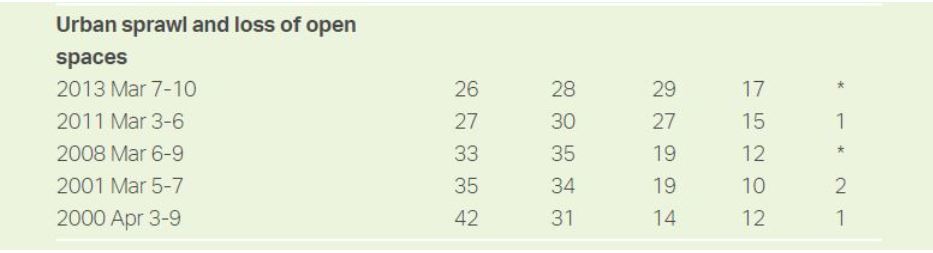
The Gallup poll posed several questions directly relevant to the effects of habitat fragmentation and loss of habitat. The 2008 poll asked whether or not the public was concerned about the loss of natural habitat for wildlife. 44% of respondents worried a “great deal”, 33% worried a “fair amount”, 17% worried “only a little”, and 6% were “not at all” worried. When asked in the 2013 poll to rank how much urban sprawl and loss of open space worried the public, 26% of people said that it worried them a “great deal”, 28% responded a “fair amount”, 29% said “only a little”, and 17% said “not at all”(Gallup 2017).

In 2017 the Gallup poll asked the public to indicate whether they were in favor or opposed to, “opening up land owned by the federal government for oil exploration”. In response to this question 46% of responses were in favor and 53% were opposed. When the same question was asked in 2014, 58% responded in favor and 41% were opposed. In 2012, 65% were in favor and 44% were opposed. This gradual change in attitude may be correlated to the slow increase in awareness and worry about the natural environment among the public. Between the years of 2012 and 2017, when the Gallup poll asked, “how much do you personally worry about the quality of the environment?”, there has been a slow and steady shift from 37% worrying a “great deal” in 2012 to 47% worrying a “great deal” in 2017.

A recent Pew Research Center survey suggests a shift toward more environmentally supportive attitudes in the American population as well (Pew 2017). Pew’s May 3-7, 2017 survey found 83% of Americans believe that increasing renewable energy sources should be a top priority for the country’s energy policy.

Relevant Survey Questions
Four of our CSUCI opinion poll questions assessed attitudes towards habitat fragmentation directly and one question assessed them indirectly. They are as follows:
- Do you know of any “wetlands” (marshes, bogs, swamps, etc.) within 50 miles of your home?
- Yes
- No
- I don’t know
- How have California’s wetlands changed over the last 150 years?
- Decreased
- Stayed about the same
- Increased
- I don’t know
- If you believe wetlands have changed, by how much have they increased or decreased?
- 1-20%
- 21-40%
- 41-60%
- 61-80%
- 81-100%
- How much of a threat to California’s coastal areas (beaches, oceans, estuaries, etc.) are the following: (please rank these options from 1 thru 4; with 1 = greatest and 4 = lowest threat)
- Pollution
- Exotic plants & animals
- Excessive hunting/fishing/collecting
- Habitat fragmentation/destruction
- What is your impression of these actions/policies? (Very negative, negative, neutral, positive, very positive, I don’t know)
- Trump’s proposed reductions to national monuments
RESULTS
1. Do you know of any “wetlands” (marshes, bogs, swamps, etc.) within 50 miles of your home?
-
- Yes
- No
- I don’t know
In addition, we looked at Ventura County residents knowledge of wetlands within 50 miles of their home:
As well as Los Angeles County residents knowledge of wetlands within 50 miles of their home:
2. How have California’s wetlands changed over the last 150 years?
a. Decreased
b. Stayed about the same
c. Increased
d. I don’t know
This graph displays the % of responses that believe wetlands have increased, decreased, stayed the same, or not sure within the last 150 years.
3. If you believe wetlands have changed, by how much have they increased or decreased?
a. 1-20%
b. 21-40%
c. 41-60%
d. 61-80%
e. 81-100%
This graph displays the amount of change in the wetland, decrease or increase, that they believe has occurred in the last 150 years.
4. How much of a threat to California’s coastal areas (beaches, oceans, estuaries, etc.) are the following: (please rank these options from 1 thru 4; with 1 = greatest and 4 = lowest threat)
-
- Pollution
- Exotic plants & animals
- Excessive hunting/fishing/collecting
- Habitat fragmentation/destruction
5. What is your impression of these actions/policies? (Very negative, negative, neutral, positive, very positive, I don’t know)
a. Trump’s proposed reductions in national monuments
This graph displays the % of answers that believe the reduction in national monuments was at least positive versus at least negative and the % who were neutral and unsure.
This graph illustrates the % of answers of the public with regard to reduction in national monuments, but who also believe that the number one threat to California’s coastal areas is habitat fragmentation and destruction.
INTERPRETATION
Wetland Knowledge
Wetlands across the world are crucial parts of their coastal environment, providing many ecological, biogeochemical and hydrological functions for their surroundings ecosystems (Mitra 2003). In focusing on Southern California wetlands within this survey, we begin to gain insight into the public’s knowledge of the history and functions of these wetlands which can provide a crucial baseline for management and restoration of these systems.
Los Angeles, Santa Barbara and Ventura counties all have many large wetland areas such as Newland marsh, Ballona Wetlands, Point Mugu wetlands, Ormond Beach wetland and Carpinteria salt marsh. One might assume that individuals living within these counties would have knowledge of the local wetlands. After surveying 1,487 people across these counties, 59% of the people surveyed indeed knew of a local wetland, while 27% did not and 14% were unsure.
Ventura County residents reported more knowledge of local wetlands (59% ‘yes’ responses and 27% ‘no’ responses) compared to Los Angeles County (46% responded ‘yes’ and 38% responded ‘no’). This may be due to an increased awareness of wetlands in Ventura County, but it also may be due to the spatial difference between the two counties. Los Angeles County is substantially larger (4,751 square miles) (County of Los Angeles 2017) than Ventura (2,208 square miles) (County of Ventura 2017) and this could mean that people in general may live further from wetlands in Los Angeles County, being more than 50 miles away.
Habitat Degradation
With the large scale decadal loss of wetlands, it is unlikely that the current population will know the true magnitude of loss that wetlands face. Coinciding with this assumption, our data showed only 8% of the population knew the true extent of wetland loss (81-100% loss). Although, with a calculated error of close to 6% for the dataset, we cannot say for certain that anyone who took the survey knew the true extent of southern California wetland loss.
Our survey asked the public to rank four major threats to California coastal areas. The four options given were pollution, habitat fragmentation and destruction, excessive resource use, and exotic species. Of the 1,389 responses given for this question, the majority (65%) ranked pollution as the biggest threat to California’s coastal areas. Habitat fragmentation came in second with 21% of respondents classifying it as the number one threat. Only 8% believed that excessive resource use was the biggest threat to California’s coastal area. A mere 6% view exotic plants and animals as the biggest threat of the given options. These results inform us that the public is aware that our natural areas are being degraded. Further confirming the public’s awareness, the poll shows 55% of the population knows there has been a decrease in southern California wetlands.
Pollution effects have captured widespread media coverage, a potential reason why pollution ranks first in the public’s perception of major coastal threats (Salwen and Dupagne 1999). Today we are still seeing the effects of the environmental movement of the 1970’s, based largely on increased levels of pollutants in our water bodies and air (Buttel and Flinn 1974). During the prime of the environmental movement, Buttel and Flinn studied the correlation of the movements widespread attention with the public’s perception of the threat of air and water pollution as well as the preservation of natural habitats (Buttel and Flinn 1974). After analyzing the data, the study found that the perception of the public was highly focused on pollution effects because they were seen as a direct consequences for urbanized areas (Buttel and Flinn 1974). On the other hand the ongoing loss of natural habitat was relatively ignored as it was more associated with rural landscape (Buttel and Flinn 1974). We cannot directly say why pollution ranks higher than habitat fragmentation, however the trends of pollution representation in the media and the environmental movement of the 1970s show similar results. The conclusion can be made that people perceive pollution as a larger threat because they see it affecting them more directly than habitat loss (Buttel and Flinn 1974).
Habitat Connectivity
The American Antiquities Act of 1906 declared that the President of the United States is authorized to establish historic landmarks, historic and prehistoric structures, and other objects of scientific interest as national monuments (§2, American Antiquities Act, 1906). Just as the president is able to establish national monuments, so can she/he remove the designation. Recent evidence of the use of this presidential power has been seen in the proposed reduction in national monuments by President Trump.
To get a better idea of the possible relationships between national monument reduction and habitat fragmentation, we compared those who responded that habitat fragmentation was the number one threat to the coast with the different responses to national monument reduction.Of those who saw fragmentation as the number one threat, 54% said that the reduction in national monuments was negative, and only 7% viewed the reduction as positive.
Many national monuments serve as vital habitat to wildlife. For example, the Sonoran Desert National Monument of Arizona serves as a sanctuary to 2,000 plant species and 500 vertebrate species in a state that has seen its human population increase by 40% between 1990 and 2001 (Cohn 2001). Therefore, the opening up of national monuments could result in habitat fragmentation if they are developed or if their resources are further utilized. Our results appear to be fairly consistent with this view of national monuments as wildlife sanctuaries in a rapidly urbanizing world.
Key Takeaway
Habitat fragmentation appears to be a major concern among the citizens of Santa Barbara, Ventura, and Los Angeles counties ranking second only to pollution as a perceived coastal threat. Where there appears to be concern about habitat fragmentation, there is also a great lack of awareness of the true extent of anthropogenic forces contributing to habitat fragmentation and wetland loss.

Ventura Harbor and state beaches. (Source: Aeronautic Pictures)
REFERENCES
Buttel, F. H., and W. L. Flinn. 1974. The Structure of Support for the Environmental Movement, 1968-1970. Rural Sociology. 39: 56-69.
Cohn, J. P. 2001. Sonoran Desert Conservation. Bioscience. 51: 606
County of Los Angeles. 2017. Geography and Statistics. http://www.lacounty.gov/government/geography-statistics/ (11/17/2017)
County of Ventura. 2017. About Us. http://www.ventura.org/county-of-ventura/about-us (11/17/2017)
Dahl, T. 1990. Wetland losses in the United States 1780’s to 1980’s. U.S. Department of the Interior. Fish and Wildlife Service.
Dark, S., R. Maas, J. Mejia, and N. Belliappa. 2006. An Examination of Wetland Diversity in Ventura County, California. Yearbook of the Association of Pacific Coast Geographers 68: 79-93.
Delaney, K., S. Riley, and R. Fisher. 2010. A Rapid, Strong, and Convergent Genetic Response to Urban Habitat Fragmentation in Four Divergent and Widespread Vertebrates. PLoS ONE. 5: 1-11.
Duda, M. 1991. A Bridge to the Future: The Wildlife Diversity Funding Initiative. A Needs Assessment for the Fish and Wildlife Conservation Act. Western Association of Fish and Wildlife Agencies.
Gallup News. 2017. In depth: Environment. http://news.gallup.com/poll/1615/environment.aspx
Hu, S., Z. Niu, Y. Chen, L. Li, and H. Zhang. 2017. Global wetlands: Potential distribution, wetland loss, and status. Science of The Total Environment. 586: 319-327.
Miller, J., and R. Hobbs. 2002. Conservation Where People Live and Work. Conservation Biology. 16: 330-337.
Mitra, S., R. Wassmann, and P. Vlek. 2003. Global Inventory Of Wetlands And Their Role In The Carbon Cycle. In. St. Louis: Federal Reserve Bank of St Louis.
Pew Research Center. 2017. Internet and Technology: Public Divides over Environmental Regulation and Energy Policy. http://www.pewinternet.org/2017/05/16/public-divides-over-environmental-regulation-and-energy-policy/
Salwen, M., and M. Dupagne. 1999. The Third-Person Effect. Communication Research. 26: 523-549.
United Nations Centre for Human Settlements. 1996. An urbanizing world: global report on human settlements, 1996. Oxford University Press. Oxford, United Kingdom.